

News
Categories

- Category: News
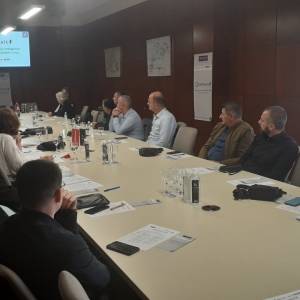
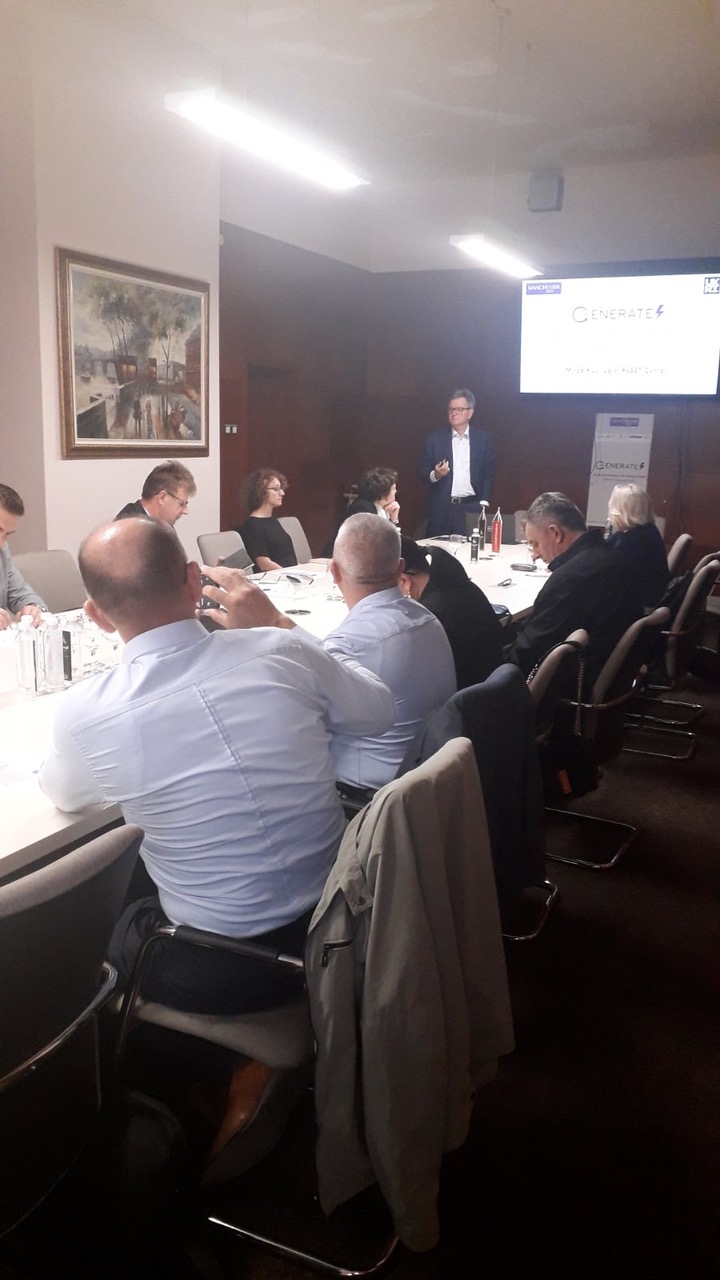
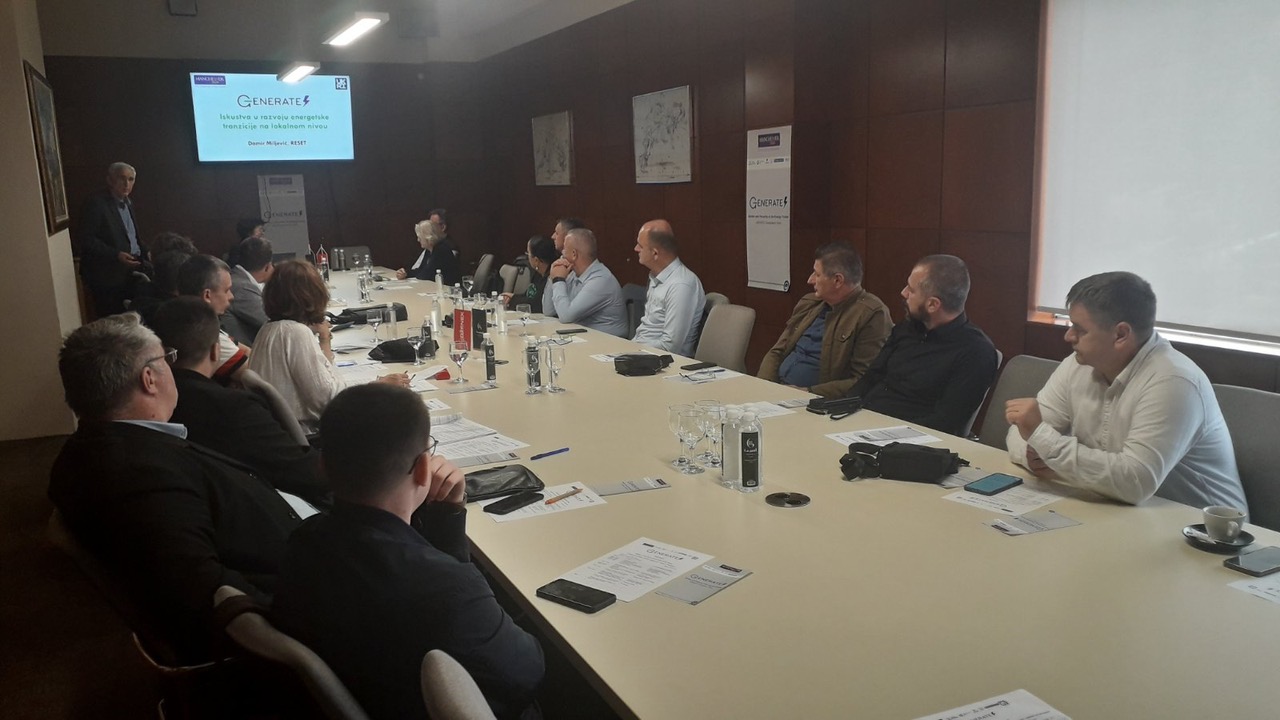
The Centre for Sustainable Energy Transition – RESET organized a workshop on September 26, 2025, in Tuzla, dedicated to the role of local communities in Bosnia and Herzegovina’s energy transition. The event was held within the framework of the international project Gender and Precarity at the Energy Frontier, coordinated by the University of Manchester.
The workshop brought together representatives from the municipalities of Živinice, Lukavac, Gračanica, and Lopare, as well as representatives from the Ministry of Education, schools, and the civil sector, with the aim of exchanging experiences and sharing best practices in implementing projects that contribute to the green transition.
A special focus was placed on public institutions – primarily schools – and their role in the shift to renewable energy. Participants presented concrete examples of solar (PV) system installations in school buildings and discussed ways to use the generated energy more efficiently during the summer months, when schools operate at reduced capacity.
An innovative mechanism of cooperation between schools and the Ministry was also presented, in which the financial savings achieved are returned to the schools, further encouraging responsible energy management and self-sufficiency of educational institutions.
It was particularly highlighted that the Municipality of Lopare became the first prosumer in Bosnia and Herzegovina through the Supporting Local Energy Transition project, opening a new path for public institutions and local communities to actively participate in the production and consumption of clean, solar energy. This pioneering step demonstrates how the prosumer concept – where consumers also produce energy – can be successfully applied in educational institutions.
School representatives shared their practical experiences, challenges, and benefits of transitioning to solar energy, emphasizing that such projects bring not only savings and greater energy independence but also educational value, as students learn first-hand about sustainability and responsible energy use.
Workshop participants agreed that further installation of PV systems represents an important step toward decarbonizing the public sector and creating resilient, self-sufficient communities.
RESET will continue to support local energy initiatives and promote positive practices that contribute to building a fair and sustainable energy system in Bosnia and Herzegovina.
- Galerija fotografija:


- Category: News
After a year of research with the participation of more than a hundred experts from the countries of the region, RESET, as part of the RePower WB project, whose realization is supported by the European Climate Foundation (ECF), completed the evaluation of international policies supporting the decarbonization of the energy sector in the countries of the region.

- Category: News
In 2022, wind power plants (WPPs) in Bosnia and Herzegovina produced 392 GWh of electricity, which is 2% more than the previous year.
In the Western Balkans countries (Albania, Bosnia and Herzegovina, Montenegro, Kosovo, Serbia and North Macedonia), the total installed wind capacity reached 801 MW, whereby Albania is the only country in Southeast Europe without wind capacity in its production portfolio. Malta is the only EU country without wind power plants.
Read more at: https://reset.ba/attachments/article/60/WIND%20BIH%202022_english.pdf

- Category: News
Bosnia and Herzegovina (BIH) follows the global trend of strong growth in the installed power of solar photovoltaic power plants. According to the preliminary data, the total power of these power plants at the end of 2022 exceeded 100 MW. See more in the article prepared by A.Mujčinagić https://reset.ba/attachments/article/60/PV%20SOLAR%202022_BIH_english_final.pdf:

- Category: News
Energy communities, where citizens, businesses, and local administrations team up to produce energy for self-consumption but also sell it, are the right solution for the Western Balkans to speed up decarbonization and make the energy transition sustainable. The current energy crisis and soaring energy prices are only adding to the significance of energy communities since they can also provide energy security for consumers – a steady supply at affordable prices. Governments should create a regulatory framework to enable energy communities to be established and then leave everything else to local actors, primarily local governments, according to speakers at the conference Citizen Energy Communities/Renewable Energy Communities. These are the main messages from the more than 80 participants present at the venue in Sarajevo.
The additional information you can get on the following link: https://balkangreenenergynews.com/western-balkan-countries-must-create-legal-framework-for-energy-communities-democratize-energy/
- The Conference: Citizens Energy Communities / Renewable energy communities
- Energy transition for SMEs – Tuzla-based meat company Menprom leads the way in smart green planning
- BALKAN GREEN ENERGY NEWS - Miljević, Kušljugić: Citizen energy – the cornerstone of a sustainable and efficient energy transition
- BALKAN GREEN ENERGY NEWS - Kušljugić, Miljević: Energy transition in Western Balkans – how to move forward